Silent Hill f Review: A Failure or Fantastic?
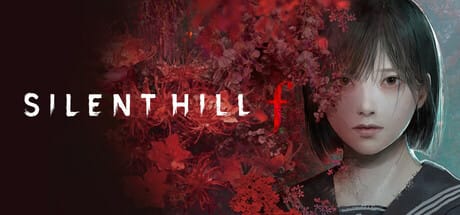
Fans of the Silent Hill franchise can rejoice as Silent Hill has finally gotten a brand new, original entry in the franchise after years with Silent Hill f. Silent Hill f brings the same psychological horror atmosphere that fans of Silent Hill know. But this time, things have taken a turn. Instead of the usual American Midwest, Silent Hill f is set in the rural Japanese town of Ebisugaoka, in the 1960s. The new setting transforms the franchise’s DNA and allows the players to experience something truly different. But does it still feel like Silent Hill? Or has the franchise’s core deviated into something different?
Silent Hill F was a surprise drop for many of us, so the question begs: Is Silent Hill F truly up to the standards of the OG games? Let’s find out.
The Victim of Ebisugaoka: Shimizu Hinako
In Silent Hill f you take control of Shimizu Hinako, arguably the franchise’s most vulnerable protagonist yet. At just around 14 or 15 years old, she isn’t a grief-stricken widower or a desperate father; she is a timid high school student suffocating under the weight of filial piety and societal expectations. Her horror begins long before the monsters show up, starting in the quiet oppression of her home life marked by an abusive father and an inept mother. To understand how these elements coalesce into a terrifying whole, read on for our full Silent Hill F Review.
Ryukishi07’s Masterclass: When Visual Novels Meet Survival Horror
The Narrative Architecture
If you know visual novels, seeing the name Ryukishi07 (creator of Higurashi) attached to this project probably sent a chill down your spine. The guy knows how to make you uncomfortable. He plays the long game here. The story burns slow, starting with petty high school drama and family fights before spiraling into absolute psychological delirium.
It’s not about punishment like Silent Hill 2. It’s about “Identity Erasure.” Hinako is terrified of becoming a “monstrous bride,” a role forced on her by a town obsessed with tradition and appearance. The “Fox Mask” mystery replaces the usual cult stuff, digging into the town’s history of “shifting faiths”—swapping gods whenever it suits them just to survive. The writing is sharp, and the tension between Hinako and her friends—Shu, Rinko, and Sakuko—feels real. You can cut the awkwardness with a knife
Pretty Poison: The Art of Floral Horror
Visuals and Atmosphere
The game is gorgeous, but in a way that makes your skin crawl. They’ve swapped the industrial rust for the Red Spider Lily (higanbana). These flowers are everywhere, bleeding red against the grey fog. In folklore, they guide the dead to the afterlife, and here, they signal that reality is rotting away.
It triggers that “Trypophobia” itch—the fear of clustered holes. Enemies aren’t just bloody; they are blooming with fungus and flowers. It’s “pretty poison.” You want to look away, but the art direction is so distinct you just stare. The “Dark Shrine” areas feel like you’re walking inside a giant, infected organism rather than a building.
Sanity, Faith, and the Focus Mechanic
Gameplay Mechanics and Tension
Mechanically, the game takes some big swings that distinguish it from its predecessors. The new Focus Mechanic is a brilliant, if stressful, addition. Holding the focus button allows Hinako to spot enemy weak points, their “pulse”, but doing so actively drains her Sanity Meter. It’s a cruel calculus: clarity comes at the cost of your mind.
This creates a desperate risk/reward system. If your Sanity hits zero, you lose the ability to use Focus attacks, and enemy psychological attacks start ripping directly through your health bar. You are left defenseless, hallucinating, and prone to panic. To mitigate this, you must engage with the Faith System. Faith is a currency earned through exploration or by “enshrining” items, which you then use to buy Omamori (charms) and upgrades. Exploring every nook of the village isn’t just for lore; it’s how you afford the “Crow” Omamori to restore health on kills or the “Goat” to survive mob attacks.
While conducting this Silent Hill F Review, we found the melee combat to be deliberately disempowering. Swinging a heavy pipe or axe is slow and clumsy. While this fits the survival horror ethos perfectly, action fans might find the stiffness frustrating. The gameplay is more like a hit-and-run goose chase if anything, unlike Silent Hill 2, for example, where you have a wider variety of options for engagement.
The Sound of Silence (and Traditional Flutes)
Audio Design and Score
Akira Yamaoka returns, and his score is a fusion of his signature industrial “noise” with the haunting resonance of traditional Japanese instruments like Taiko drums and flutes. The track “Mayoi Uta,” featuring a sorrowful flute melody, sets a tone of tragic nostalgia that lingers long after you put the controller down.
The audio design understands the power of the void. It’s the “sound of silence” that gets you—the unnerving lack of music during exploration segments, punctuated only by the wet squelching of floral enemies. The voice acting adds another layer of immersion. Hinako’s panicked breathing during the “Chase” sequences is palpable, and the performance for Rinko captures a terrifying shift from “good girl” facade to hysterical breakdown. It is rare to hear a soundscape this meticulous, a sentiment shared by many critics in their own Silent Hill F Review coverage.
Puzzles, Backtracking, and the “Old School” Loop
Level Design and Progression
This is a return to the “Old School” loop. The puzzles are real brain-teasers, requiring you to read documents like the “Article: Serious Issues in Ebisugaoka” or the “Local Doctor’s Note” to decipher riddle-based locks. It’s refreshing to see puzzles that demand literacy rather than just matching colored shapes.
However, the backtracking can be a slog. Ebisugaoka is beautiful, but traversing the same muddy paths repeatedly can kill the pacing in the mid-game. The “Dark Shrine” dungeon design is a highlight, though, offering a labyrinthine confusion that rivals the classic Silent Hill Hospital maps. The UI, specifically the “Journal” system, is immersive but can be a bit clunky to navigate when you’re frantically trying to piece together the fragmented history of the town while listening for monsters.
The Verdict: A Bloomed Masterpiece or a Weed?
Final Thoughts and Recommendation
So, does it feel like Silent Hill without the town? The answer is a resounding yes. By stripping away the American setting, the game reveals the franchise’s true core: the atmosphere of isolation and psychological projection. Silent Hill f captures the essence of the series while planting it in fertile new soil.
The Pros: Ryukishi07 has penned an incredible, layered story that rewards deep engagement. The art direction is stunningly grotesque, and Yamaoka’s score is a career highlight. The Cons: The combat can feel stiff and unpolished, and the “Faith” grinding might annoy purists who just want to immerse themselves in the atmosphere or experience the story.
To conclude our Silent Hill F Review, we believe this is an essential play for psychological horror fans. It is a successful reinvention of the franchise’s formula for a modern (and Eastern) context. It is a slow, creeping nightmare that blooms into something unforgettable.
Rating: 8.5/10